Most museum and attraction shops are “look, don’t touch.” That’s tidy, but it shortens visits. A small, well-managed please touch display invites curiosity, slows the pace, and turns “maybe later” into “I’ll take it.”
Why touch works
Handling lowers the decision barrier. Weight, finish, and page feel answer questions faster than signage. Guests linger, compare, and imagine the product in their bag at home. It’s simple retail psychology, hands lead hearts.
What belongs on the Hands-On Shelf
Choose items that get better in the hand and won’t suffer from light handling.
-
Insulated bottle: test the grip, weight, lid thread; loopable wrap reads premium when rotated.
-
A5 notebook: page stock, lay-flat feel, rounded corners, elastic and ribbon.
-
Ceramic mug: rim comfort and handle fit; show a set of two patterns.
-
Tote: fabric weight and strap drop; fold and unfold once.
-
Pin or keyring board: let guests unclip one sample to check fastening and finish.
Keep one pristine stack behind each tester so staff can swap quickly when a sample looks tired.
Layout that invites touch
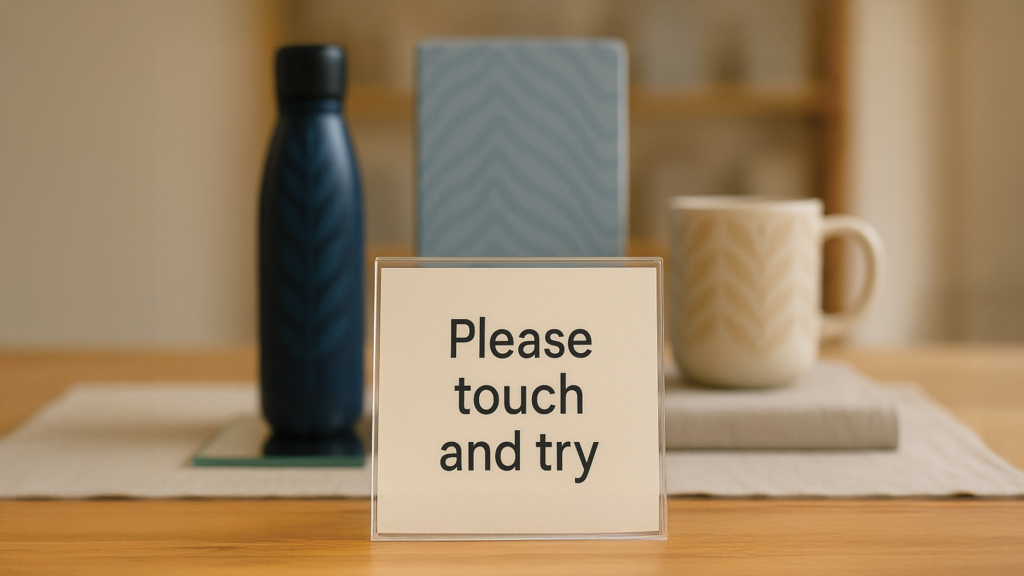
Use a waist-high table on a clear path. Give each tester its own footprint, small riser or coaster, so it feels intentional, not a jumble. Add one mirror tile under the bottle or mug to create a gentle glint without glare. Keep copy minimal: a warm line above the products and tiny price tabs below.
Friendly sign (print-ready text):
Please touch and try.
"These are sample pieces, pick a fresh one from the stack when you’re ready"
The tiny hygiene kit
Place a shallow tray under the table with:
-
Microfibre cloth (bottles, ceramics)
-
Unscented wipes or alcohol spray for quick sanitising
-
Lint roller for totes
-
Spare swing tags and a mini stapler
One minute per hour is enough: wipe, de-lint, straighten. During peak days, do the routine whenever the queue clears.
Staff rhythm
Open with a light script: “Feel free to try the lid and paper, those are testers.” Offer to fetch a fresh boxed item when someone lingers. If you have colourways, keep the alternates within reach so staff can swap without leaving the guest.
What to measure
Two simple signals tell you it’s working: time at the table (does it rise?), and attachment rate for the tester SKUs. If fingerprints are your only downside, the kit is doing its job.
Quick start this afternoon
-
Pick three testers (bottle, notebook, mug) that represent your current collection.
-
Stage a clear table with individual footprints and a friendly sign.
-
Stock fresh items directly behind each tester.
-
Set the hygiene tray and brief staff on the one-minute hourly reset.